
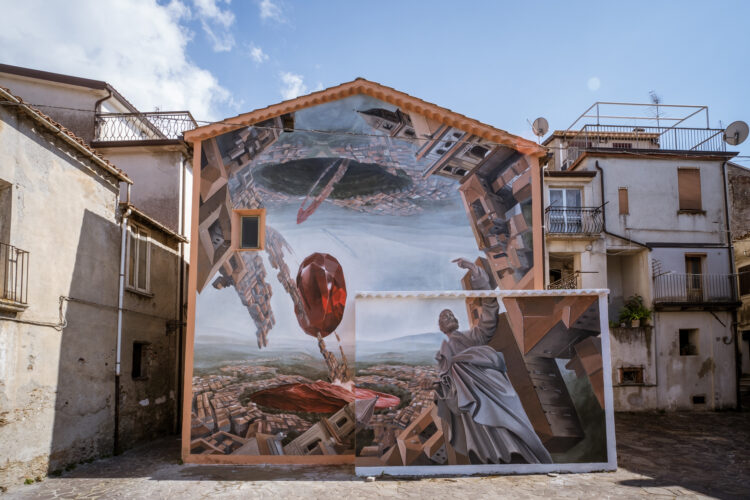
Gulìa Urbana 2027
Gulìa Urbana is a travelling urban art festival promoted by APS Rublanum, connecting contemporary creativity with the places, histories and communities of Calabria. Through the creation of murals, artistic residencies and participatory cultural activities, the festival transforms public spaces into places of encounter and discovery, creating an open-air museum spread across villages, towns and neighbourhoods.
At the heart of Gulìa Urbana lies the relationship between artists and their surroundings. Each artistic intervention emerges from an encounter with its host environment: residents’ memories, landscapes, traditions and social transformations become sources of research and inspiration. In this way, the artworks become part of the communities’ everyday lives, offering new perspectives on familiar places and helping to strengthen a sense of belonging and care for shared spaces.
The festival brings together Italian and international artists with different artistic approaches and perspectives, encouraging exchanges between experiences and cultures. Alongside established artists, emerging talents are given opportunities to develop their practice, experiment and engage in professional exchanges through site-specific projects. The residencies allow artists to get to know their host communities and develop works that engage with the identity of each location.
The festival’s travelling format enables contemporary art to reach smaller towns and areas that are less frequently included in traditional cultural programmes. Gulìa Urbana connects different territories through a shared artistic journey while preserving the distinctive character of each place. Visitors are invited to explore streets, squares and neighbourhoods, discovering not only the artworks but also the historical, natural and human heritage surrounding them. The visit thus becomes a cultural experience that continues beyond the festival itself.
Particular attention is given to Calabria’s Arbëreshë communities, which preserve a valuable linguistic and cultural heritage. In these settings, urban art becomes a means of dialogue between memory and contemporary life, helping to tell stories of identity, traditions and intercultural connections. Exchanges between artists, residents and local organisations create new opportunities to interpret and pass on this heritage, while also engaging younger generations.
Alongside mural production, the programme includes creative workshops, meetings with artists, talks, guided tours and opportunities for further exploration. These activities introduce diverse audiences to artistic processes and provide meaningful opportunities for participation. Children, young people and adults can observe artworks taking shape, discover techniques and artistic languages, share stories and reflect on the role of art in public spaces.
The festival’s artistic exploration also encompasses the relationship between painting, audiovisual media and digital technologies. Augmented reality projects and multimedia content expand the ways in which audiences can experience the artworks, introducing additional layers of storytelling and new forms of engagement. Photography and video accompany the process, documenting both the artists’ work and the relationships that develop around their interventions.
Inclusion, cultural accessibility and participation are central values of the project. Bringing art into everyday public spaces makes it possible to reach people who do not usually visit museums and galleries. The artworks and activities provide opportunities to address social issues, reflect on contemporary society and encourage open dialogue through the communicative power of images.
Gulìa Urbana continues to grow through collaboration with public authorities, associations, schools, cultural professionals and local residents. This network supports an initiative that extends beyond the individual event, leaving behind lasting artworks, skills and relationships within the communities, while promoting art as a shared experience and an opportunity for cultural regeneration.
Practical info

Pricerange per day

Art disciplines